

PAST (2000-2010)
Reality shows became a popular point of topic and discussion among Filipinos. Pinoy Big Brother on the ABS-CBN channel was deliberately framed as a "social experiment" show. People felt involved in the trajectory of shows like PBB since they were encouraged to vote through text messaging and often discussed things like "Who should be evicted?" with each other in-person and on forums like PinoyExchange.

PRESENT (2010s-2020s)
PBB will likely still be popular, discussions will likely still be in platforms like Twitter/X. There is a chance that a show with a similar premise but a slight twist may emerge and become mainstream. Since PBB is already a long-running series, it may be the ideal time to release a newer, more novel show.

FUTURE (2030s+)
New seasons of PBB will release and still be popular, discussions will likely still be in platforms like Twitter/X and FaceBook. There is a chance that a show with a similar premise but a slight twist may emerge and become mainstream. Since PBB is already a long-running series, it may be the ideal time to release a newer, more novel show. For example, a show with a similar format as PBB when it comes to participant interactions, but the contestants are all chefs and they have segments dedicated to food, or all contestants are models and they have segments dedicated to fashion.
PAST (2000-2010)
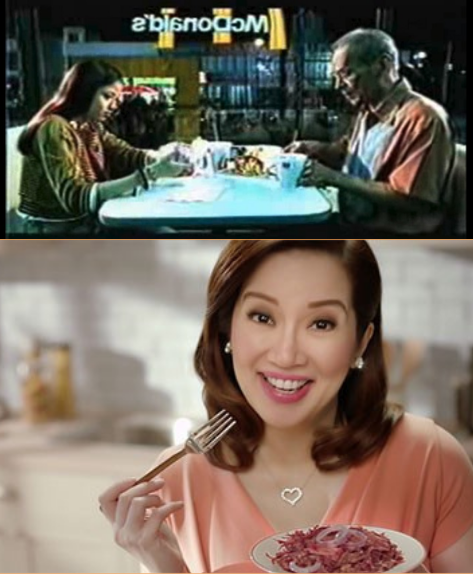
Names like Kris Aquino were seen acting in adertisements for products like Purefoods' Chunkee Corned Beef and Pantene, and stars from teleseryes were also featured, such as John Lloyd Cruz in the Biogesic commercial with his "Ingat!" tagline. Successful video advertisements of this time that did not feature popular actors appealed to Filipino values through story. An example would be McDonald's "Lolo, Karen po" broadcasted in 2001. An article from 2002 acknowledged how the ad widely popular the ad became among Filipino McDonald's' and propelled sales to "astronomical heights" even earning itself multiple TV Ad of the Year awards.
PRESENT (2010s-2020s)
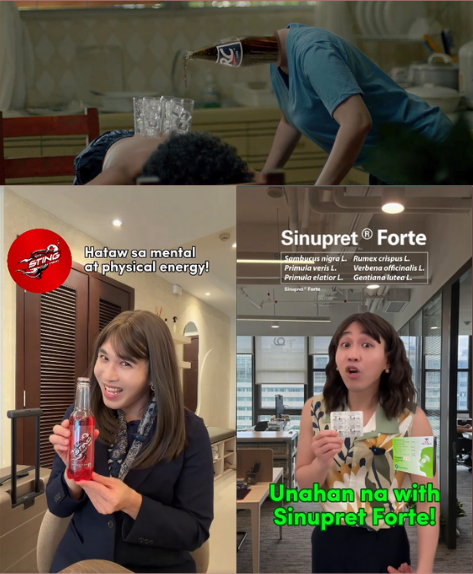
Video advertisements are still a popular way of achieving mass commercialization, though the platforms they show on have changed, being integrated into social media like YouTube, TikTok, and FaceBook. Some creators such as DavaoKonyo make funny skits on platforms like FaceBook reels that also cater to the younger generations' humor and has been praised for the witty integration. Even with no famous names of celebrities or content creators, humor seems to be a factor that makes an advertisement do well , an example being RC Cola's "Basta" ad, that had a mother's head turn into an RC Cola bottle for no reason.
FUTURE (2030s+)
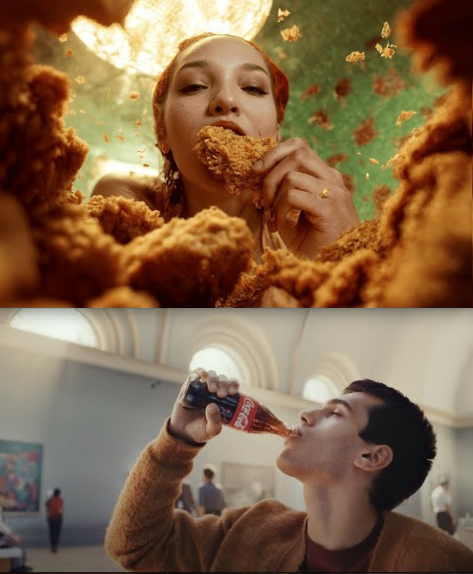
Advertisements will have even higher production, whether funny skits in short-form contents, or short films appealing to emotions. The success of a product will be less of the fame of the celebrity in game shows or the movies they star in, but rather their popularity on social media, how good the production and editing is, and how seamless a product is integrated into a story or skit.

PAST (2000-2010)
Video advertisements through broadcast media, like TV channels was again one of the most effective ways for politicians to reahc a wide audience. In video advertisements, emphasis was placed on building an overall narrative around the candidates. For example, Manny Villar used his rags-to-riches story to build his character with his jingle "Sipag at Tiyaga". Celebrities also endorsed political candidates in their shows, like Boy Abunda with Gloria Macapagal-Arroyo.
PRESENT (2010s-2020s)
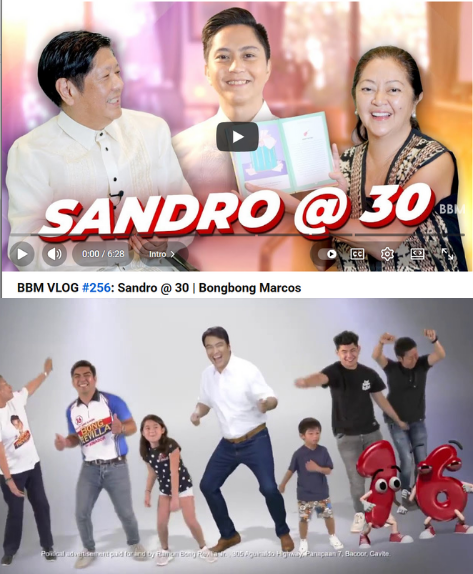
Politicians, aside from video advertisements on TV, are now also realeasing vlog-form contents, streaming on FaceBook live or uploading videos on YouTube channels to foster a sense of relatabiltiy to the masses. An example would be Bongbong Marcos, where aside from his TV ads of unity, he also uploaded vlogs on his YouTube channel where he showed behind-the-scenes of his family. It is now also common to see Filipino celebrities or popular figures being voted into the senate. Examples include Bong Revilla, who won in 2019 in the senate race despite just being detained in prison for plunder cases, primarily for his Budots performance.

FUTURE (2030s+)
As the voting population slowly grows towards the younger generations who are digital natives, politicians will start to cater more to pop culture in social media. Aside from having their own social media channels, politicians will likely collaborate more with popular social media figures to produce relatable content and establish a more prominent presence online. This trend has already started with Mimiyuuuh and Leni Robredo's collaboration and we will likely see this trend grow.

PAST (2000-2010)
Given that television was the only way to access teleseryes on a specific time in a day and specific days in the week, and the popular duopoly that was ABS-CBN and GMA, people were more centralized in the shows they watched, making it easier to identify mainstream teleseryes.
PRESENT (2010s-2020s)
Teleseryes still show on TV but are now also available in streaming platforms such as iWantTFC, Netflix, and Viu. Since these teleseryes are now accessible anytime, viewing is more individualized and fragmented. Viewership becomes even more fragmented now that global dramas are more accessible and compete for attention.

FUTURE (2030s+)
More teleseryes will migrate to globally popular streaming platforms such as Netflix and Viu. There is a chance for a more modern, Filipino-centered streaming site to emerge and become popular. There is also a chance for an indie teleserye to gain popularity and pave the way for other indie series. Instead of established actors as the cast, rising social media figures or already popular social media figures may be cast.

PAST (2000-2010)
The Philippine Educational Theater Association (PETA) opened in 2005. The organization became important for raising social awareness and consciousness of environmental problems and issues, staging plays about the struggles of landless farmers, or indigenous people, who are most affected by environmental problems such as deforestation and mining. In 2009-2010, they launched Lingap Sining: Nurturing Hearts through the Arts, where they used integrated theater arts to help people, especially children, process their trauma from experiencing typhoons like Ondoy.
PRESENT (2010s-2020s)
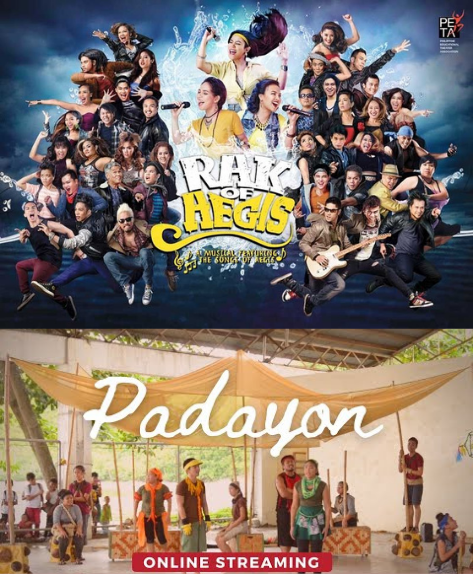
In 2013, PETA held another iteration of the program Lingap Sining, to help communities affected by the typhoon Yolanda. "Padayon!" was among the produced musicals. In 2014, PETA produced one of their most popular musicals, Rak of Aegis, with a main character that aspired to be a singer to bring attention to her flooded town.

FUTURE (2030s+)
PETA has been steady throughout the years. Given the increasing climate-related disasters in our country, such as flood and earthquakes, musicals that encourage the public to care for the environment may be held. More performances about rising from calamities might also be held as a form therapy for people who have been affected by environmental issues.